Book a demo

Security

Kubernetes policy as a rule table, with the proof built in.

Firewall Policies, Universal Rules and Security Objects give the cluster a rule table your team can review. Impact Analysis shows what a change will deny before it goes live, and Assurance, Tetragon and compliance reports prove it keeps working.

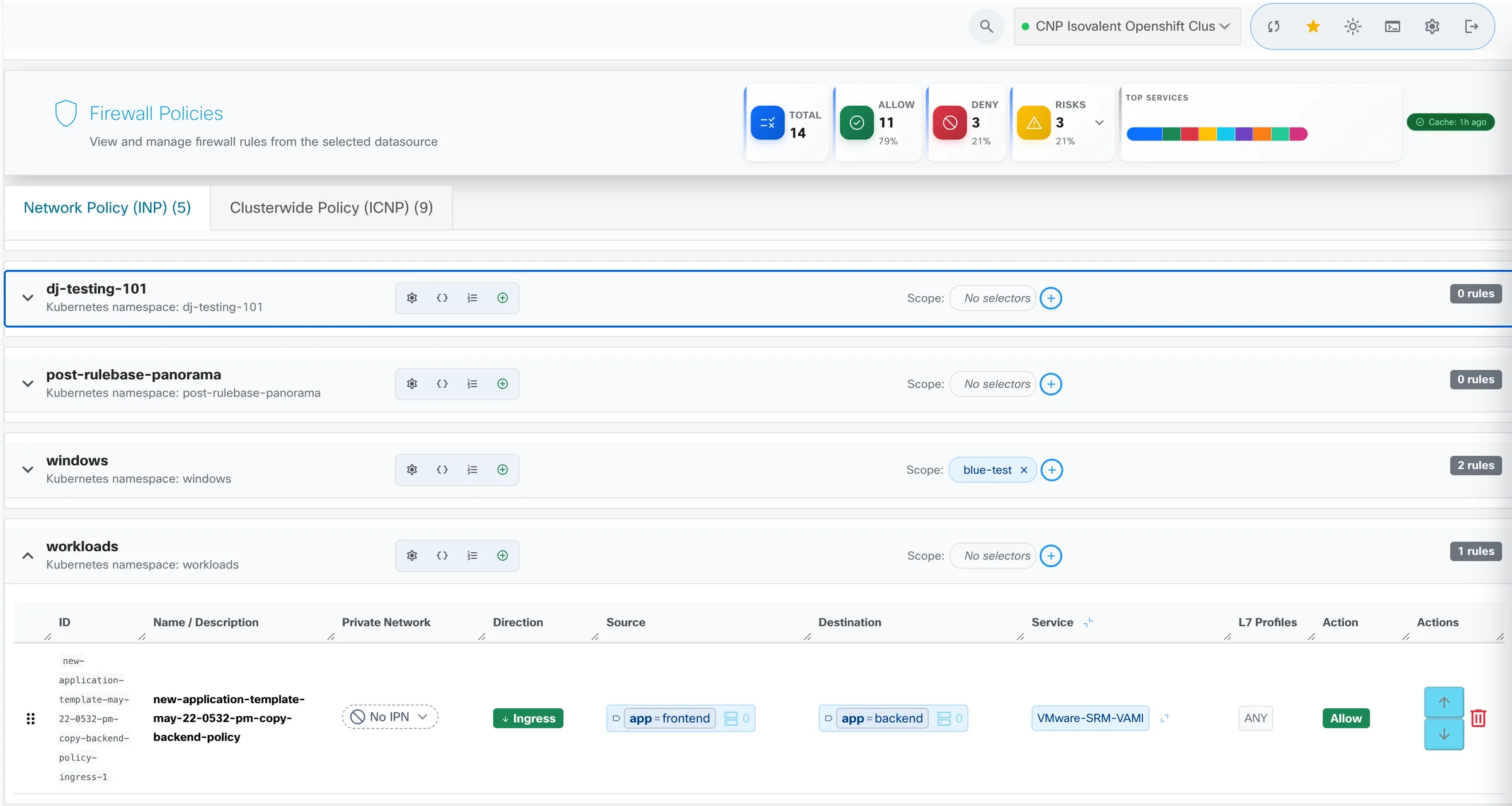
Fabrix Firewall Policies: namespaces with a rules table allowing source app=frontend to destination app=backend, and Total, Allow, Deny and Risks totals

Security in the console

For you
Local
Firewall PoliciesThe firewall rule table, over a Kubernetes cluster.
Rule table: source / destination / service / actionHit Count & RisksPublish Validation → Impact Analysis → PublishCluster baseline protection
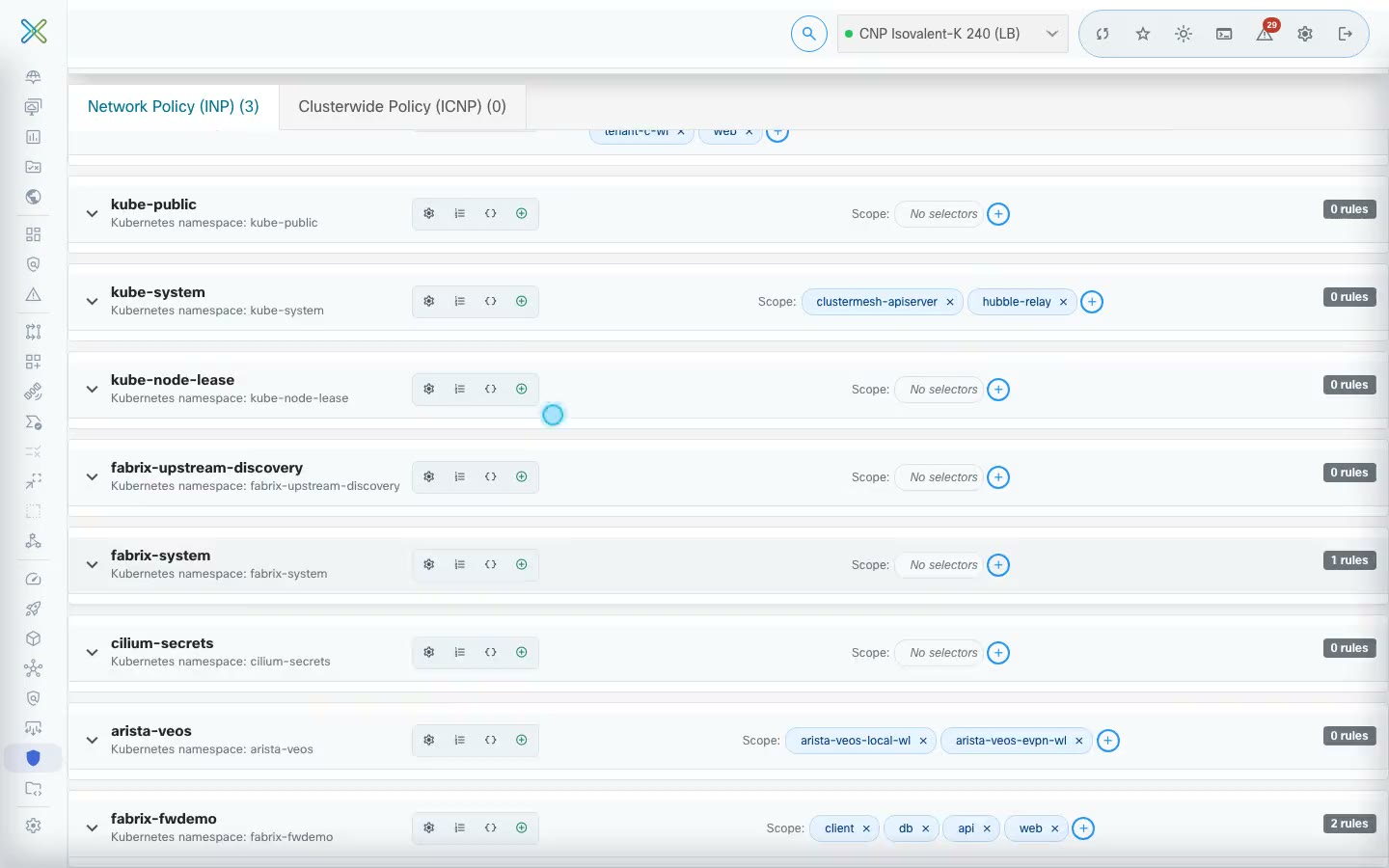
Screen recording of Fabrix Firewall Policies on an Isovalent cluster: the fabrix-fwdemo namespace expands, a rule is added and its source app=web, destination app=api and HTTPS service are filled in
For you
Local
Security ObjectsThe building blocks: labels, services, groups, CIDRs, FQDNs.
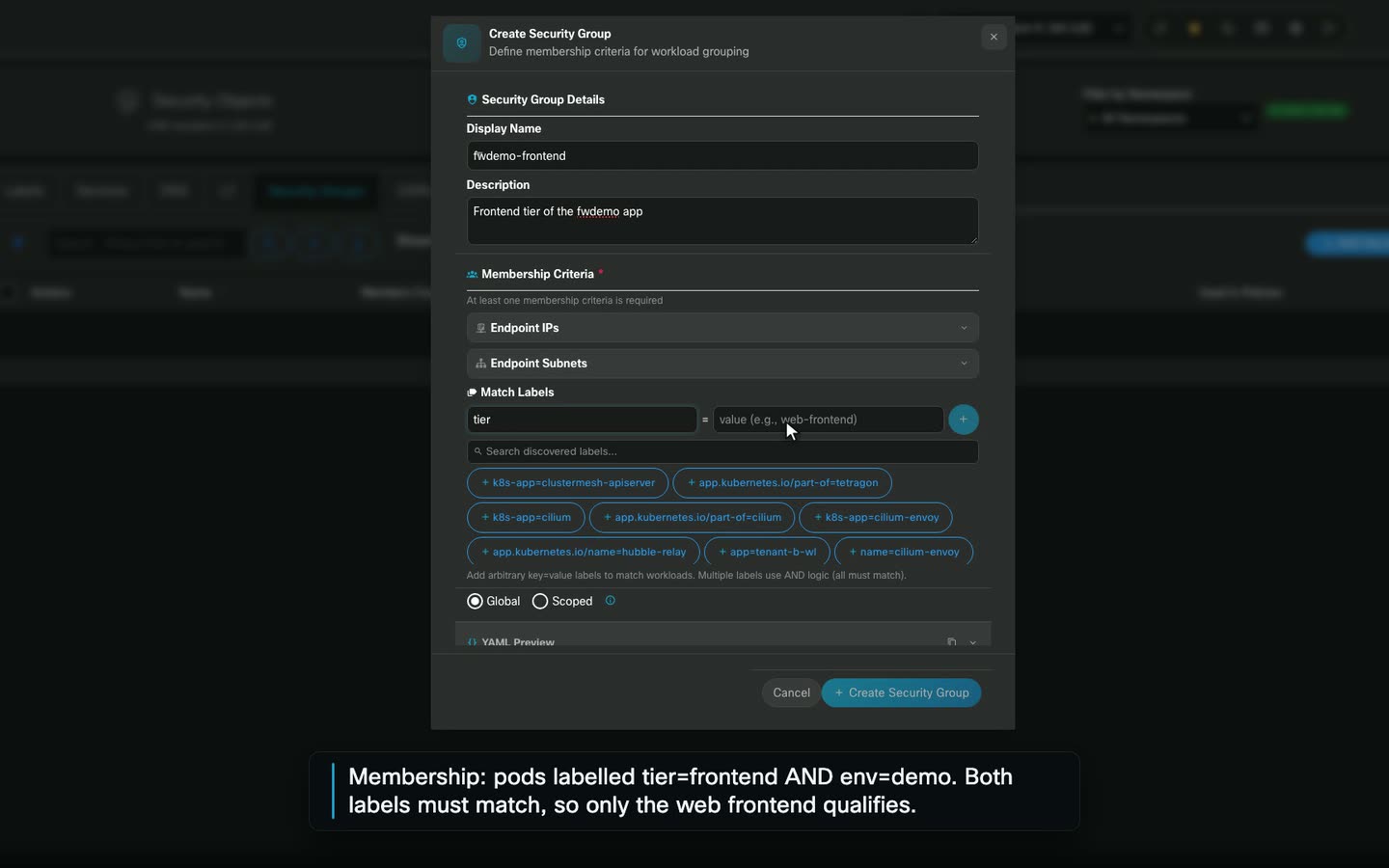
Labels · Services · DNS · L7Security Groups · CIDRsFQDN Groups · External Endpoints
Screen recording of Fabrix Security Objects: creating a security group whose members are pods labelled tier=frontend and env=demo
For you
Universal
Universal RulesWrite once, publish to every cluster.
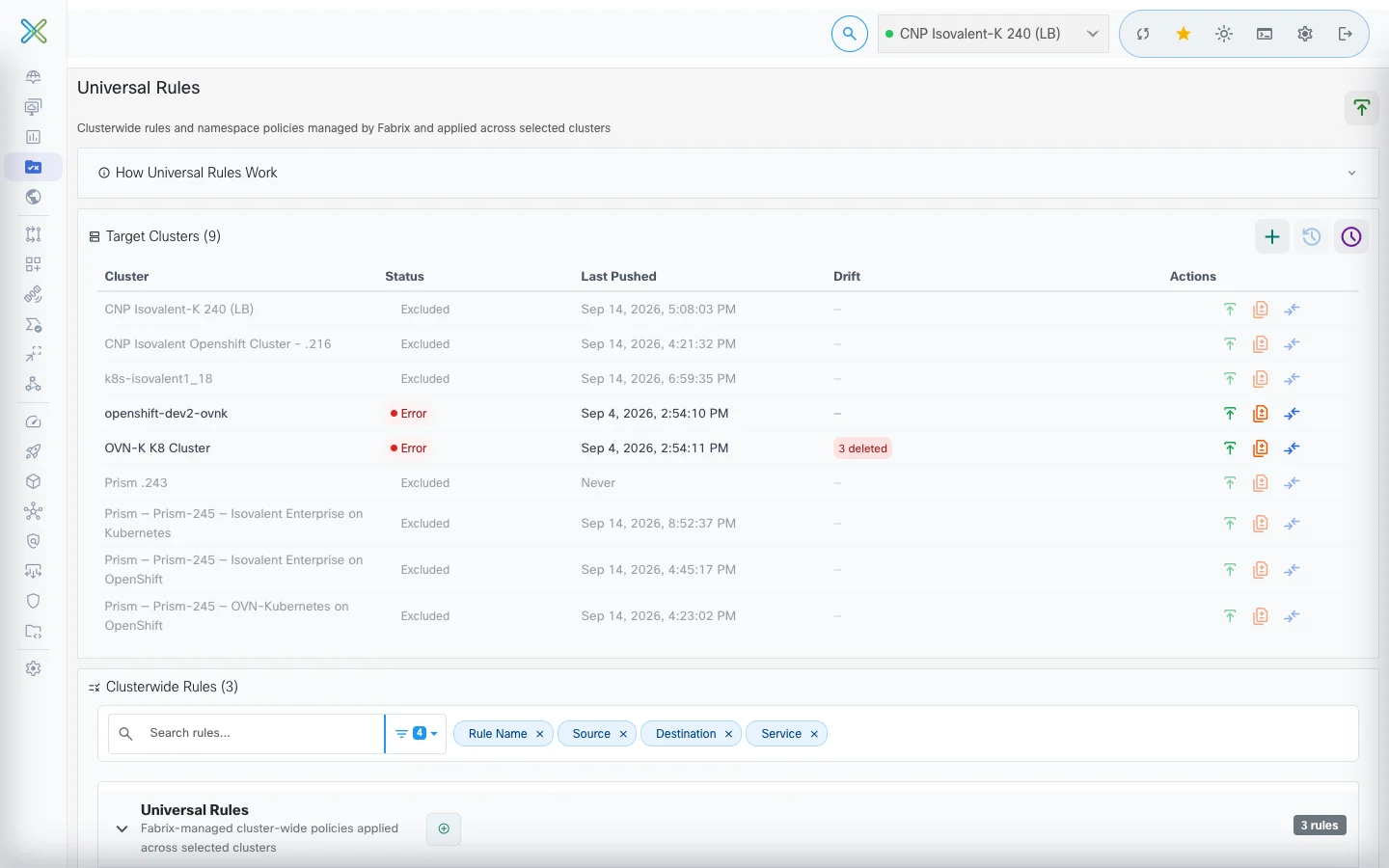
Target clusters pickerPublish preview per clusterCheck Drift
Fabrix Universal Rules: target clusters with status, last pushed time and drift, and the clusterwide rules Fabrix publishes to every selected cluster
For you
Universal
Universal ObjectsShared objects defined once and reused across clusters.
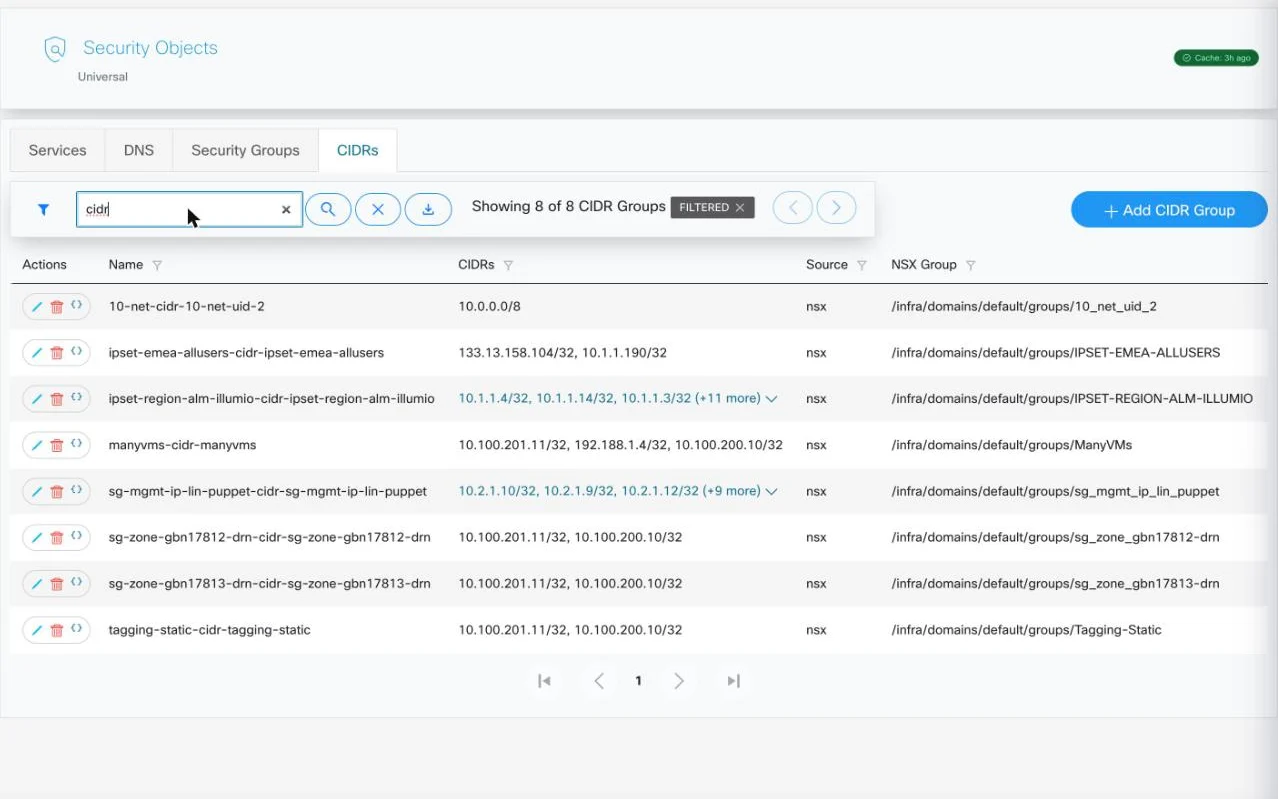
Define once, reuse across clustersCilium-family datasources
Fabrix Universal security objects: CIDR groups defined once and reused across clusters, each traced to the NSX group it came from
For you
Off-menu
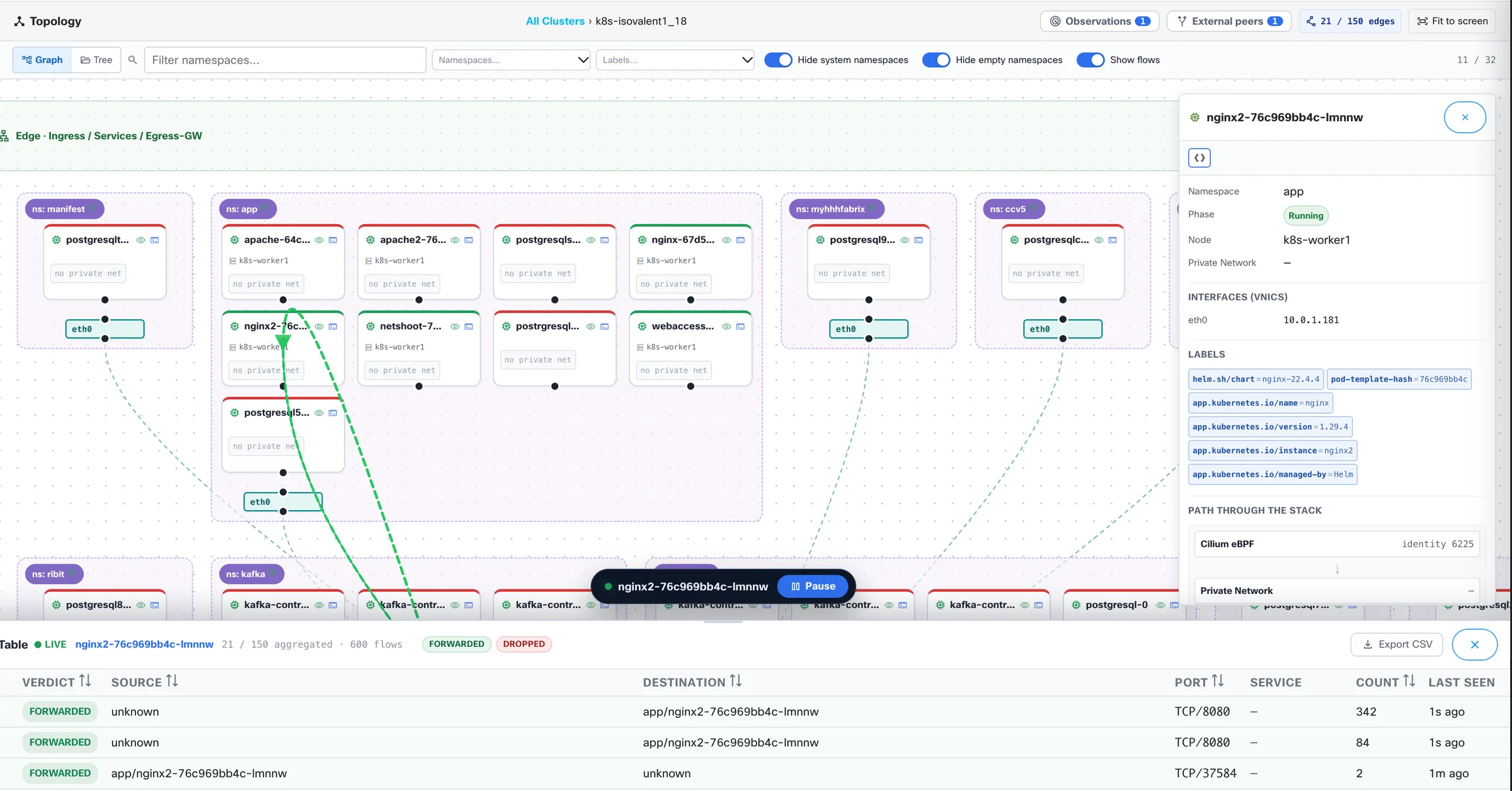
TopologyLive map of every workload, with Hubble flows on the edges.
Live flows: forwarded / droppedCreate Allow/Deny policy prefilled from this flowStack layers down to the Physical Underlay
Fabrix Topology: workloads grouped by namespace with a live Hubble flow drawn as a green dashed edge, a node inspector, and a flow table of FORWARDED verdicts
For you
Tools
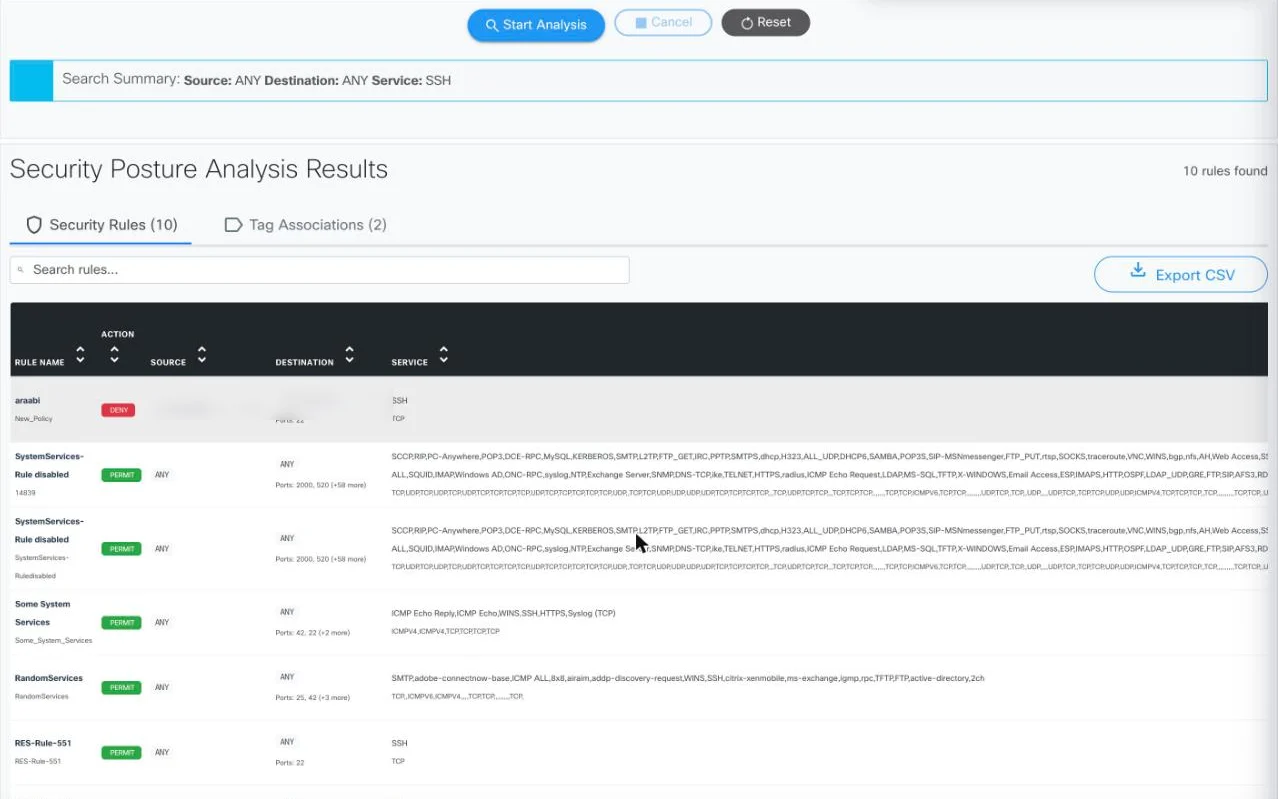
LocatorWhich rules affect this traffic?
Search by workload, IP, tag, groupSource + destination rules
Fabrix Rule Locator on an NSX Local Manager: a search for SSH finds the 10 DFW rules that allow or deny it, with action, source, destination, ports and services
For you
Local
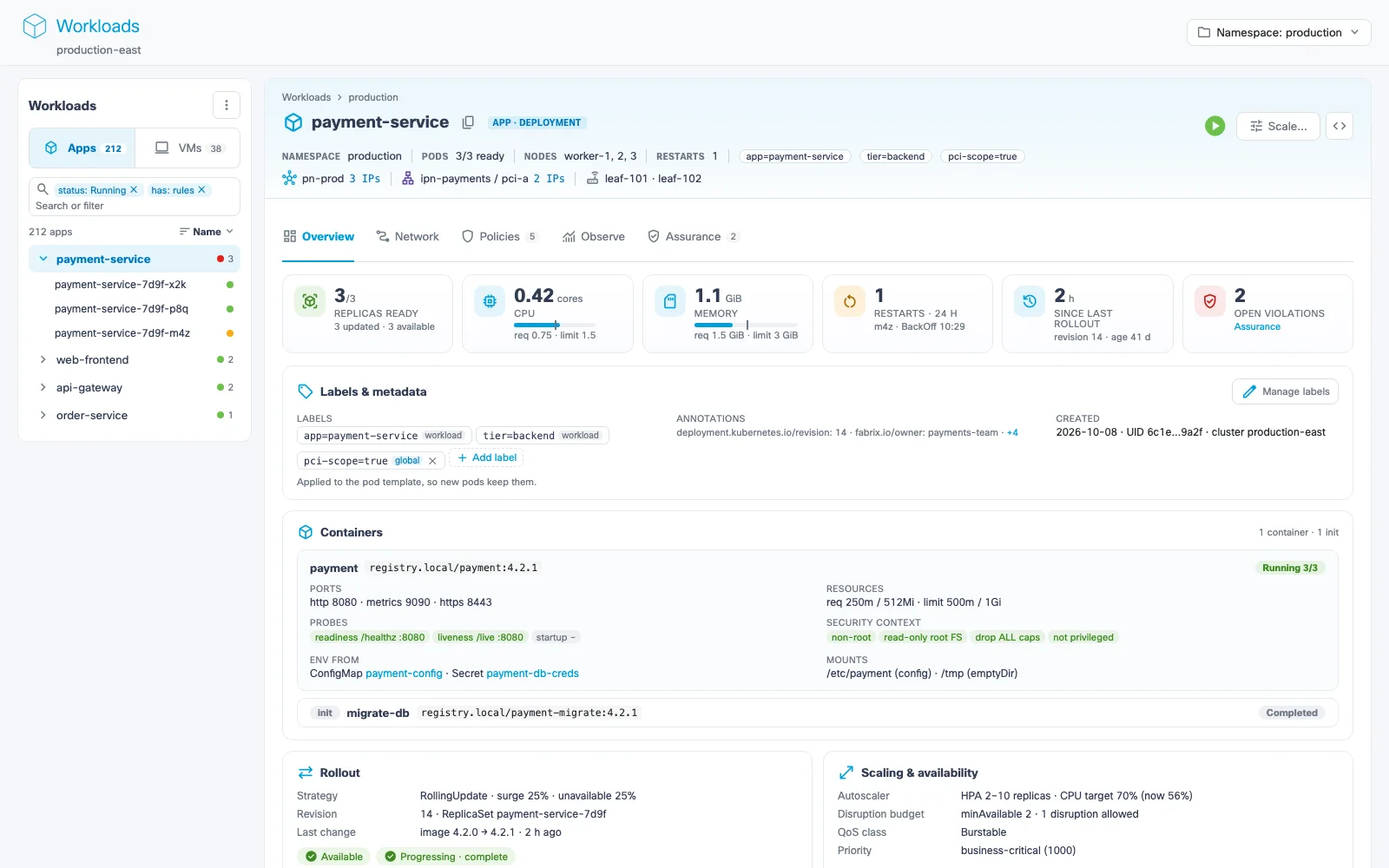
WorkloadsPods and VMs, with consoles and deep connectivity detail.
Open Console · Debug commands · Endpoint InspectorVirtual Machines tab + serial consoleConnectivity: Effective Policy · Exposure · DependenciesTetragon: Recent processes · Privilege events
Fabrix Workloads design preview: the payment-service app with replicas, CPU, memory, restarts, rollout age and open violations, its labels, containers, rollout, scaling and pods
For you
Tools
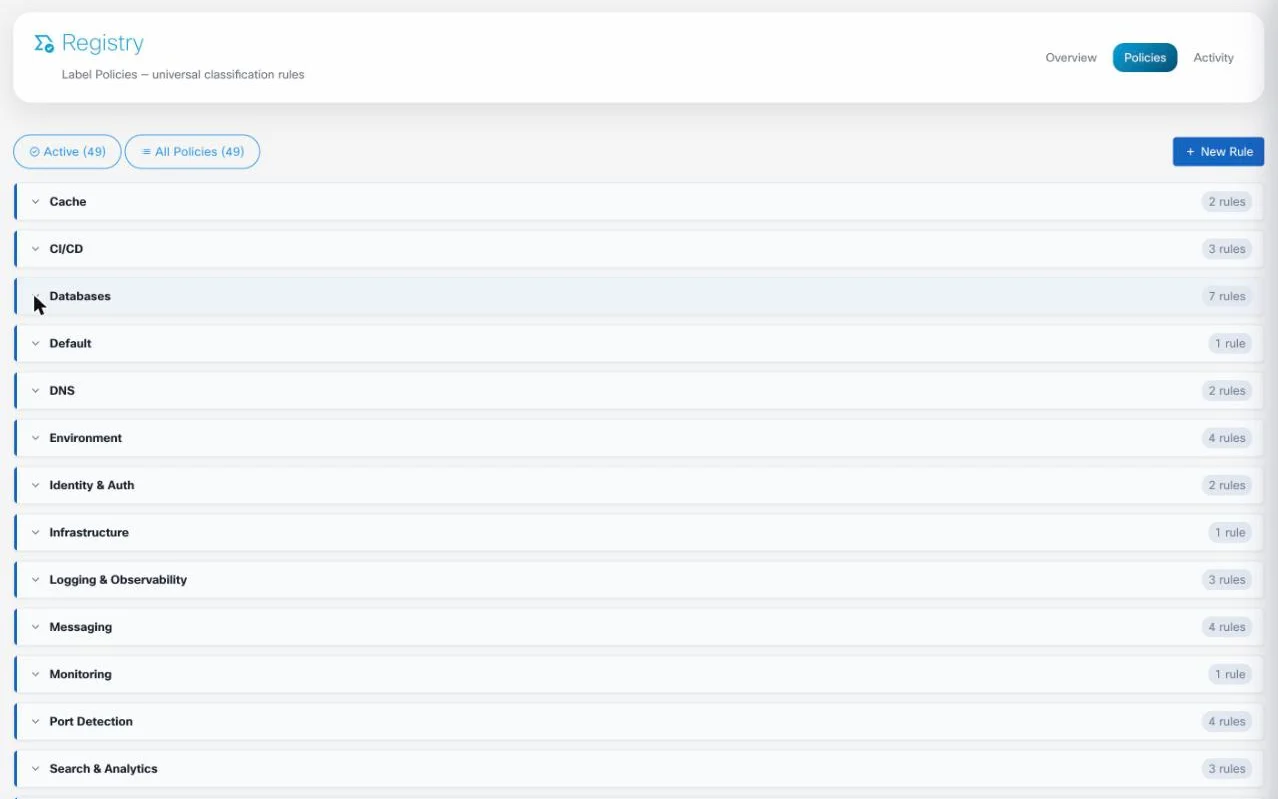
RegistryEnterprise workload label management.
Compliant / Mismatch / MissingAudit · Suggest · Enforce
Fabrix Registry label policies: 49 universal classification rules grouped by category, from databases and messaging to identity, DNS and service mesh
For you
Tools
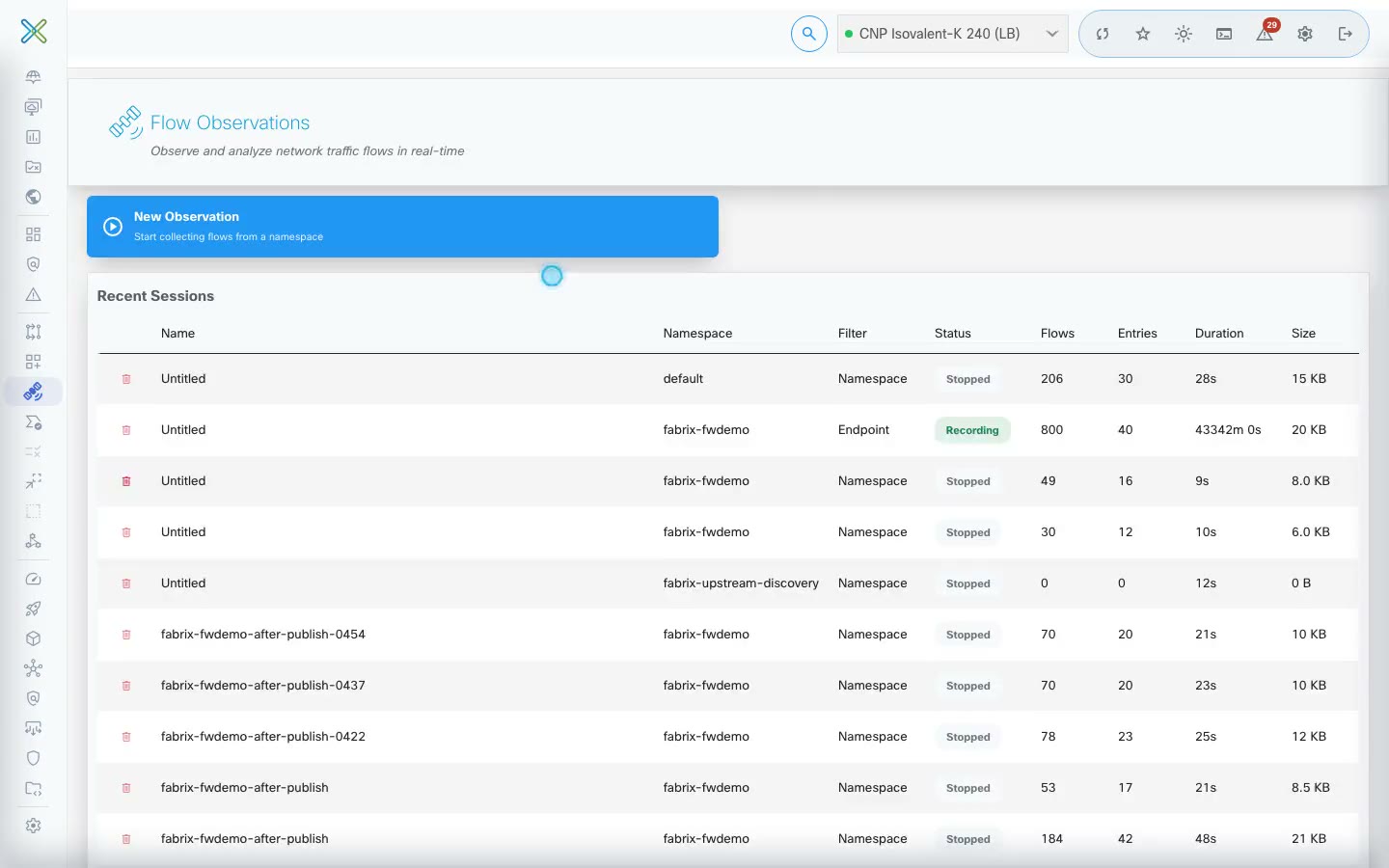
ObservatoryRecord flows, find the gaps, export the policy.
Record the app's trafficPolicy Gap AnalysisAlert rulesExport to Canvas
Screen recording of a Fabrix Observatory session: Hubble connections over time, a network graph of kube-dns, client, api, db and world with flow counts per edge, and the flow table with a forwarded flow expanded
For you
Assurance
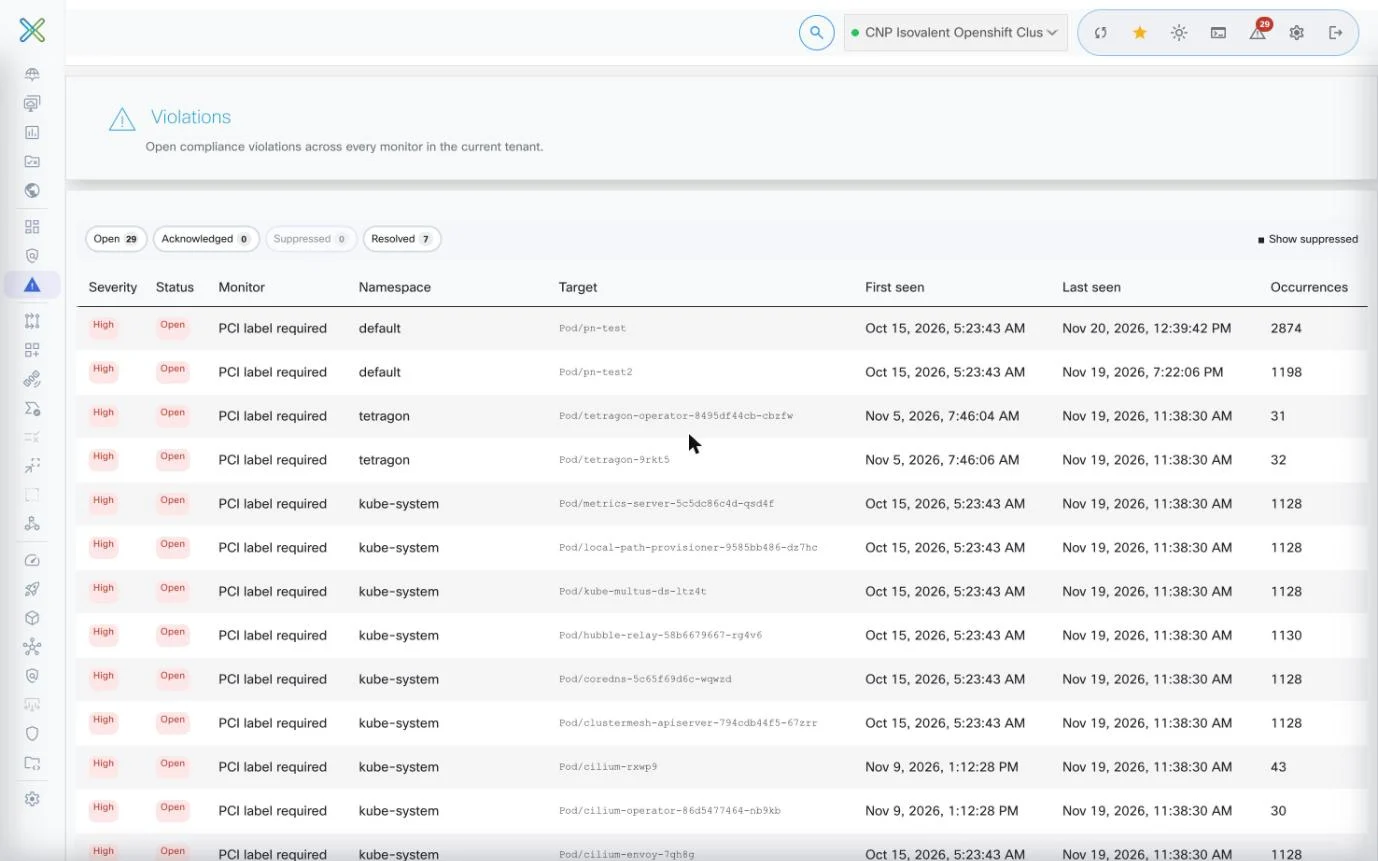
AssuranceContinuous checks on how workloads should look and behave.
Dashboard: open violations by severityMonitors: Baseline from workloadRuntime Monitor (Tetragon allowed processes)Violations: Acknowledge / Suppress / Reopen
Fabrix Assurance Violations: open, acknowledged, suppressed and resolved violations of the PCI label required monitor, by namespace and pod, with first seen, last seen and occurrences
For you
Universal
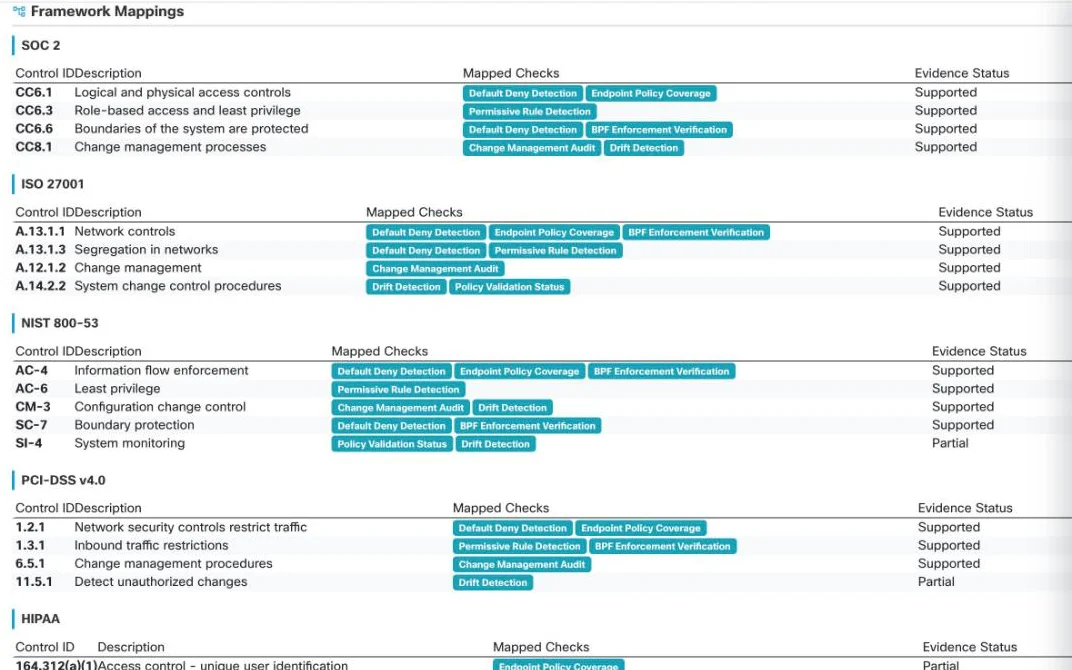
Compliance ReportsAudit-ready posture, mapped to frameworks.
Executive Summary scoreFramework MappingsEnforcement Evidence · Drift AnalysisPDF · Excel · JSON export
Fabrix Compliance Report for an Isovalent on OpenShift cluster: SOC 2, ISO 27001, NIST 800-53, PCI-DSS v4.0 and HIPAA controls mapped to Fabrix checks, with evidence status for each
For you
Universal
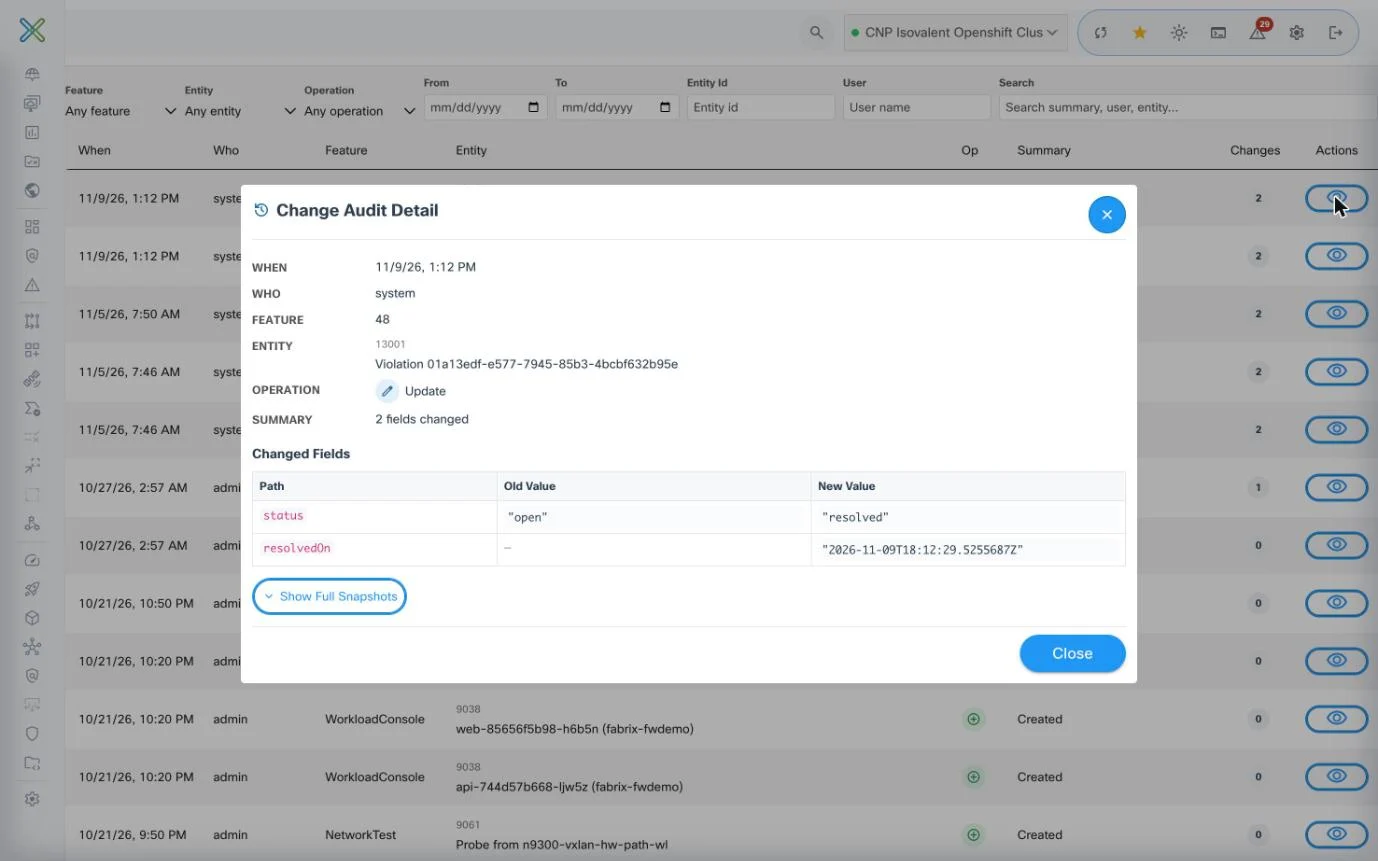
Change AuditOld vs new object for every change.
Old vs new objectFilter by feature, user, operation
Fabrix Change Audit: a filterable history of every create, update and delete, with a detail dialog showing each changed field old value against new value

Deep dive

Policy, from authoring to audit.

  1. Firewall Policies

    The rule table you know, with impact analysis before every publish.

    Sections and rules you can reorder, enable and disable, with source, destination, service and applied-to, L7 and context profiles. A default policy per namespace, View YAML and Export to Excel.

    • Tabs: "Network Policy (CNP/INP/OVN)" and "Clusterwide Policy"
    • "Hit Count" and "Risks" on every rule
    • "Publish Validation" → "Impact Analysis" ("Impacted Endpoints", "New Denied Flows") → Publish
    • "Cluster baseline protection": essential allowances that heal drift from out-of-band deletes
    • Private Network scoping on Isovalent; manage policy through a linked Git repository
  2. Universal Rules · Security Objects

    Write a rule once, publish it to every cluster, and catch drift.

    Universal Rules publish one rule set to many clusters, with a preview per cluster. The building blocks are shared Security Objects, so a rule reads like a firewall rule, not a selector.

    • Publish preview per cluster
    • "Check Drift", a drift schedule and "Restore Rules"
    • Labels, Services, DNS, L7, Security Groups and CIDRs
    • On Isovalent: Pod Nets, FQDN Groups and External Endpoints
  3. Topology · Observatory · Locator

    From the traffic you can see to the policy you need.

    Live Hubble flows on the topology become prefilled rules. Observatory records an app's flows and proposes the allow policy for you to review before applying.

    • "Create Allow/Deny policy prefilled from this flow"
    • Observatory: record Hubble flows, alerts, "Export to Canvas"
    • "Policy Gap Analysis" proposes an allow policy, reviewed before it is applied
    • Locator: which rules affect given traffic
  4. Assurance · Tetragon · Compliance

    See it, fix it, prove it.

    Monitors define what good looks like, Violations catch drift with evidence, Tetragon shows what is actually running, and the compliance report turns it into audit-ready evidence.

    • Monitors: workload identity, required and prohibited labels, image, port and security-context rules; "Baseline from workload"
    • "Connectivity Monitor" and "Runtime Monitor" (Tetragon allowed processes), auto-remediation by label
    • Violations: acknowledge, suppress, reopen, with evidence and a lifecycle timeline
    • Workload detail (Tetragon): "Listening ports", "Recent processes", "Privilege events"
    • Compliance report: Executive Summary score, Framework Mappings, Enforcement Evidence, Drift Analysis; Excel, JSON and PDF. Change Audit: old vs new object per change

Fine print

  • Pod Nets, FQDN Groups, External Endpoints and Private Network scoping are Isovalent features.
  • Assurance works on any Kubernetes datasource; Registry is for the Cilium family.

See it live

Walk through your rule table, impact analysis and a compliance report with us.